
Vijay K Banda
Global Cybersecurity Leader, Social Entrepreneur & Author, SynRadar/ BuildMyCareer.org
Honored as “The Global Cybersecurity & Social Impact Leader of 2026”
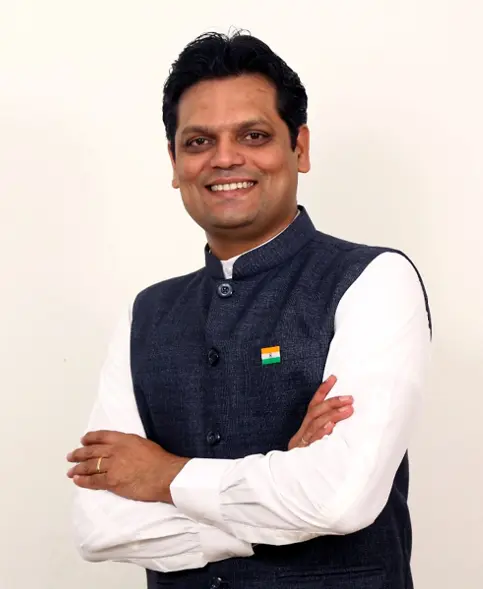
The Global Cybersecurity & Social Impact Leader of 2026
Vijay K Banda’s professional journey is a story of technology, leadership, service, and a strong belief in the power of people. Over three decades, his career has crossed continents, industries, and some of the most demanding areas of enterprise technology. From working with Fortune 100 organizations to leading cybersecurity initiatives and building platforms focused on career development, Banda has consistently looked beyond the immediate demands of a role. His work reflects a wider question: how can technology, leadership, and human potential come together to create lasting value?
Today, Banda brings together two closely connected areas of work. As a Global Cybersecurity Leader at SynRadar, he focuses on the changing nature of cyber risk and the need for organizations to build stronger digital resilience. Through BuildMyCareer.org, which evolved from YesMentor.org, he works on another form of resilience, helping learners and professionals prepare for a changing world of work. His experience has led him to see a clear connection between the two. Strong digital systems need capable people, and capable people need the skills, mindset, and adaptability to operate confidently in an increasingly digital environment.
This perspective has shaped Banda’s leadership philosophy. His framework of creating a “#NewMindset,” inspiring “#NewActions,” and pursuing the “#RightResults” is rooted in the belief that meaningful progress begins with people. Technology can transform systems, but human judgement determines how those systems are used. Cybersecurity can protect digital infrastructure, but resilient people are essential to maintaining that protection. Career development can open doors, but continuous learning is necessary to keep those doors open.
His career therefore extends beyond a conventional technology leadership story. It represents an ongoing effort to connect professional excellence with social purpose.
From Global Technology Leadership to Social Purpose
Banda’s career has developed across three continents and a wide range of Fortune 100 organizations. Such an experience naturally brings exposure to different business models, technologies, leadership styles, and cultural environments. Yet, rather than viewing these experiences as separate chapters, Banda gradually began to see them as connected parts of a larger professional purpose.
One of the most important turning points came when he recognized that corporate technology strategy and nation-building could exist within the same vision. Enterprise technology could solve business problems, while technology leadership could also contribute to stronger communities and better opportunities for individuals.
That realization eventually led to the creation of YesMentor.org in 2016. The initiative later evolved into BuildMyCareer.org, expanding the focus on mentoring, learning, employability, and career development. The platform reflects Banda’s belief that access to guidance can significantly influence the direction of a professional journey.
The scale of that work has become one of the most meaningful measures of his career. BuildMyCareer.org has empowered more than one lakh learners across India, creating an impact that goes beyond conventional corporate metrics. For Banda, this form of contribution carries a particular significance because it connects technology with opportunity.
His approach also reflects a broader understanding of what leadership can mean. Leadership does not necessarily begin with a title. It can begin with identifying a problem, taking responsibility for addressing it, and creating a platform through which others can move forward.
This philosophy has remained relevant as Banda has moved deeper into cybersecurity and emerging technology. His work at SynRadar has reinforced the understanding that digital resilience and human resilience are closely connected.
A Leadership Philosophy Built Around Humanism
Banda’s leadership framework is centered on three ideas: a new mindset, new actions, and the right results. While the language is simple, the philosophy behind it reflects years of working across complex organizations and diverse cultures.
The “#NewMindset” represents the willingness to question established assumptions. In a technology environment where threats, tools, and business priorities change quickly, leaders cannot depend entirely on past methods. They need to remain open to learning, adaptation, and new ways of approaching problems.
The second element, “#NewActions,” focuses on execution. A new idea has limited value unless it leads to meaningful action. For Banda, leadership involves moving from intention to implementation and encouraging people to translate knowledge into results.
The final element, “#RightResults,” brings accountability into the framework. Results matter, but Banda’s definition of meaningful results extends beyond financial or operational outcomes. The impact on people, trust, communities, and long-term resilience also forms part of the equation.
His leadership perspective is influenced by a Dharmic worldview that places humanism at the centre. Rather than treating this as a fixed formula, Banda has applied the underlying principles across different cultural and professional environments.
His experience across three continents has required an ability to work with people who bring different expectations, communication styles, and approaches to decision-making. Adaptation has therefore been a necessary part of his leadership journey.
However, adaptation has not meant abandoning core values. Banda has maintained a focus on trust, ethics, dignity, and the responsible use of technology. These principles have provided continuity while working across different organizational and cultural contexts.
For Banda, technology should ultimately serve fundamental human needs. Digital transformation, cybersecurity, artificial intelligence, and workforce development are not separate from society. They affect how people work, communicate, learn, and participate in the economy.
This human-centered approach gives his technology leadership a wider purpose. Cybersecurity is not only about protecting systems. It is also about protecting the people, organizations, and communities that depend on those systems.
Building Cyber Resilience for a Changing Threat Landscape
The cybersecurity environment has changed significantly as technology has become more deeply integrated into business and everyday life. Organizations face a growing range of digital risks, while attackers increasingly exploit not only technical weaknesses but also human behavior.
Banda’s work with SynRadar reflects an understanding of this changing environment. His focus is on strengthening cyber resilience, particularly for small and medium-sized businesses that may not have the same resources as large enterprises. Alongside this focus, SynRadar is also working toward developing a Made in India, indigenous cybersecurity product, supporting the broader goal of strengthening national digital sovereignty and building greater confidence in locally developed cybersecurity capabilities.
The traditional view of cybersecurity often places significant attention on technology such as firewalls, endpoint protection, monitoring systems, and access controls. These remain important, but modern cyber risk requires a broader approach.
Human behavior has become an increasingly important part of the security equation. Social engineering, phishing, manipulation, credential theft, and other forms of attack can target individuals as directly as they target technical systems.
Banda sees an important connection between this challenge and his work in career development. Both cybersecurity and workforce development require resilience. Both depend on continuous learning. Both require people to respond effectively when circumstances change.
AI as a Tool for Opportunity
Artificial intelligence is also central to Banda’s thinking about the future of work. While much of the public discussion around AI focuses on automation and disruption, Banda sees another possibility: technology can become a tool for reducing economic inequality when it is developed and applied responsibly.
At BuildMyCareer.org, the combination of ethical AI and human mentorship reflects this philosophy. AI can provide scale, speed, and access to information, while human mentorship can provide context, encouragement, judgement, and personal understanding.
This combination is important because career development is rarely a purely technical process. People often need help identifying their strengths, understanding changing market expectations, building confidence, and choosing between different paths.
AI can support these processes, but Banda’s approach does not position technology as a substitute for human connection. Instead, it places technology alongside mentorship.
The distinction is important. Technology can make knowledge more accessible, but meaningful development also requires human guidance. The future of career development may therefore depend on finding the right balance between digital tools and personal support.
Banda’s work reflects this balance. His objective is not simply to introduce technology into career development but to use technology to expand access to meaningful opportunities.
This philosophy also connects with his broader belief that technology should be anchored in purpose and social responsibility. AI can become an equalizing force when people can access it, understand it, and use it to improve their circumstances.
However, access alone is not enough. People need the skills to use technology effectively, the judgement to understand its limitations, and the resilience to keep learning as the technology evolves.
Moving Beyond the Traditional Career Ladder
One of Banda’s strongest observations about professional development is that modern careers can no longer be viewed as simple ladders.
The traditional career model suggests a relatively predictable progression. An individual enters an organization, develops experience, receives promotions, and gradually moves into more senior positions. While this path remains possible, the modern professional environment is far more fluid.
Industries change quickly. New technologies emerge. Job roles evolve. Skills that were valuable a few years ago may need to be supplemented or replaced. Professionals may move between industries, functions, organizations, and even career identities.
Banda describes the modern career as an interconnected web rather than a rigid ladder. The metaphor captures the importance of relationships, transferable skills, continuous learning, reputation, adaptability, and the ability to demonstrate value across different situations.
This view is central to the ideas explored in his books, Skill Up India, Hello Future Skills, and his executive cybersecurity book, A Handbook for Developing the CISO Mindset. Together, these works reflect different dimensions of his focus on preparing professionals for a future where technical knowledge, strategic thinking, leadership, and adaptability must work together.
Professionals must be willing to keep learning. They must understand their own strengths while also identifying areas where new skills are required. They must build relationships and remain adaptable.
Perhaps most importantly, they must develop the ability to continue moving forward when circumstances do not go according to plan.
The Rising Importance of Adversity Quotient
Banda identifies Adversity Quotient, or AQ, as a capability that will become increasingly valuable over the coming decade.
The concept reflects a professional’s ability to respond to difficulty, uncertainty, setbacks, and changing circumstances. In a rapidly evolving technology environment, this capacity can become as important as technical expertise.
Technology professionals may find themselves working with systems that did not exist when their careers began. Leaders may need to manage teams through economic shifts, organizational changes, new regulations, and disruptive technologies. Young professionals may need to change career direction several times as industries evolve.
In such an environment, resilience becomes a practical professional skill.
Banda’s concept of the “Strategic Guardian” captures this shift. The future cybersecurity professional cannot be viewed only as a technical defender. The role increasingly involves understanding business risk, human behavior, organizational priorities, technology trends, and long-term strategy.
This expanded role requires a wider range of skills. Technical knowledge remains important, but it needs to be combined with communication, judgement, adaptability, strategic thinking, and ethical responsibility.
The same principle applies beyond cybersecurity. Professionals across industries will need to become comfortable with change rather than simply reacting to it.
Continuous upskilling therefore becomes more than a career advantage. It becomes a form of professional resilience.
Recognition Through Impact
Banda’s professional journey has included significant recognition, including the ET Enterprise Security Award and recognition from Dr. Kiran Bedi at the Bharat 2.0 Conclave 2026 for Leadership in Career Mentoring.
Such recognition provides an external acknowledgement of professional contribution. Yet Banda places greater emphasis on the practical outcomes created through his work.
For him, the more meaningful measure of recognition is the number of people whose lives have been improved through access to knowledge, mentorship, and opportunity.
The impact of BuildMyCareer.org, which has reached more than one lakh learners across India, represents an important milestone within this larger vision. This achievement forms part of Banda’s broader “1 Million Mission,” an ambition to equip one million emerging professionals with future-ready skills and help them navigate the changing demands of the global workplace.
This perspective reflects a leadership philosophy that does not treat professional achievement and social contribution as competing goals. Instead, it connects the two.
Career success creates opportunities to influence others. Influence creates responsibility. Responsibility can then be translated into programmes, platforms, and initiatives that help others develop.
Banda summarizes this belief simply: “Success has meaning only when it lifts others along the way.”
The statement also helps explain why mentoring has remained an important part of his professional identity. For Banda, experience becomes more valuable when it is shared.
Challenges That Shape Better Leaders
Every stage of Banda’s career has brought different challenges. Working across continents and Fortune 100 environments requires professionals to adjust to different corporate cultures and business priorities. Moving between enterprise leadership, entrepreneurship, cybersecurity, and social impact brings another layer of complexity.
Yet challenges have also helped reinforce his belief in adaptability.
The cybersecurity sector itself provides a constant reminder that there is no permanent finish line. Threats change. Technologies evolve. Business models shift. Attackers experiment with new methods, while organizations continuously search for better ways to protect themselves.
This environment demands leaders who are comfortable with uncertainty.
The same is true in career development. Young professionals entering the workforce may face uncertainty about which skills will remain relevant, how AI will affect their roles, and where new opportunities will emerge.
Banda’s response is not to encourage people to predict every change. Instead, he encourages them to become capable of navigating change.
That means developing a learning mindset, building a diverse skill set, maintaining professional relationships, and strengthening the ability to recover from setbacks.
It also means understanding that a career can change direction without losing its sense of purpose.
His own journey demonstrates this principle. Enterprise technology, cybersecurity, mentoring, social entrepreneurship, writing, and civic awareness may appear to be different areas. In Banda’s professional philosophy, however, they form part of the same larger mission: using knowledge and technology to create stronger individuals, organizations, and communities.
Connecting Technology With Civic Responsibility
Banda’s interest in social impact extends beyond professional development and cybersecurity. His involvement with the India Empowered Citizens Network reflects an interest in civic awareness and the role individuals can play in strengthening society.
This work aligns with his wider belief that technology should serve human needs.
Digital platforms increasingly influence how people access information, communicate, participate in communities, and engage with institutions. As this influence grows, digital literacy and civic awareness become increasingly important.
Technology leadership therefore carries responsibilities that extend beyond the boundaries of an organization.
For Banda, leadership is connected to service. This does not mean separating business performance from social responsibility. Instead, it means understanding that business, technology, and society are interconnected.
This approach is particularly relevant at a time when AI and digital platforms are becoming part of almost every major sector.
The leaders shaping these technologies will influence more than productivity. Their decisions can affect access to opportunity, privacy, security, education, and employment.
Banda’s human-centered philosophy places these wider considerations within the leadership conversation.
Preparing the Next Generation of Strategic Guardians
Looking ahead, Banda’s work sits at the intersection of cybersecurity, AI, workforce development, and human potential.
At SynRadar, the focus remains on building stronger cyber resilience for organizations navigating a complex digital environment. At BuildMyCareer.org, the emphasis remains on developing people who can adapt to the changing world of work.
The connection between these areas is likely to become even stronger.
As organizations adopt AI and increasingly complex digital systems, they will need professionals who can understand both technology and people. Cybersecurity teams will need to communicate with business leaders. Business leaders will need to understand digital risk. Employees will need to recognize their role in protecting information.
At the same time, professionals will need continuous opportunities to learn and adapt.
This creates a need for a new type of leader. The future leader will not be defined only by technical knowledge or organizational authority. Strategic thinking, resilience, ethics, communication, and human understanding will become increasingly important.
Banda’s idea of the “Strategic Guardian” reflects this broader role. Such professionals will protect not only systems but also trust, continuity, people, and organizational purpose.
The concept also represents a shift from reactive thinking to proactive preparation.
Rather than waiting for disruption before responding, organizations and individuals can develop the capabilities required to navigate uncertainty before it arrives.
A Career Built Around Connection
The defining feature of Vijay K Banda’s journey is perhaps the ability to connect areas that are often viewed separately.
Cybersecurity connects with human behavior. AI connects with economic opportunity. Career development connects with national growth. Mentoring connects with leadership. Technology connects with social responsibility.
These connections have shaped a professional philosophy that places people at the center of digital transformation.
His experience across global technology environments has provided the corporate perspective. His work through YesMentor.org and BuildMyCareer.org has provided the social impact dimension. His cybersecurity leadership at SynRadar has brought these ideas into an environment where technology, risk, and human behavior meet every day.
The result is a leadership approach focused not only on what technology can do, but on what people can achieve with it.
For Banda, the future is not simply about building more advanced systems. It is about building people who are ready to use those systems responsibly and effectively.
That means encouraging professionals to replace rigid career thinking with continuous development. It means preparing organizations to understand human behavior alongside technical risk. It means using AI to widen access to opportunity while keeping human judgement at the center. And it means viewing leadership as a form of service rather than simply a position of authority.
The Road Ahead
The next chapter of Banda’s journey is likely to remain focused on the same central question that has shaped his work for years: how can technology and human potential work together to create meaningful progress?
The answer is visible across his professional roles.
Cybersecurity provides the protection. AI provides new capabilities. Mentorship provides guidance. Education provides opportunity. Resilience provides the ability to continue when conditions change.
Together, these elements create a broader vision of the future.
Banda’s journey demonstrates that a career does not have to remain confined to one industry, one role, or one definition of success. Experience gained in global technology leadership can become the foundation for entrepreneurship. Cybersecurity expertise can inform human development. Mentoring can become a vehicle for social impact. Writing can help translate experience into ideas that reach a wider audience.
His professional story is therefore less about following a predetermined path and more about continuously connecting purpose with action.
As technology continues to reshape business and society, that approach becomes increasingly relevant. The organizations and professionals prepared for the future will not necessarily be those that know exactly what comes next. They will be those capable of learning, adapting, protecting what matters, and creating value through uncertainty.
For Vijay K Banda, that future begins with people.
His work across cybersecurity, AI, career development, mentoring, writing, and social entrepreneurship reflects a consistent belief that stronger technology requires stronger human capability. His vision is not limited to building secure digital environments or preparing individuals for employment. It is about creating resilient people who can contribute meaningfully to a changing world.
That is the foundation behind his leadership philosophy and the thread connecting the different chapters of his career.
In an era defined by rapid technological change, his message remains clear: a future-ready world will require more than advanced technology. It will require a new mindset, new actions, and the right results, supported by people who are prepared to learn, adapt, lead, and lift others along the way.