
Joan Gillman
Science Teacher at The Browning School
Honored as “Most Trusted Educator and Mentor of the Year 2026”
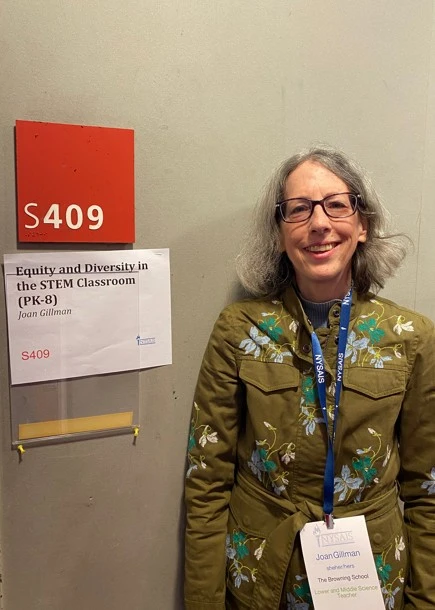
Joan Gillman: Inspiring Young Minds Through Science, Curiosity, and Purpose
The most meaningful discoveries often begin with a simple question. For generations of students, science has been the doorway to understanding the world, but the impact of a great educator goes far beyond lessons and experiments. It comes from creating curiosity, encouraging exploration, and helping young minds believe they can contribute to something bigger than themselves.
For Joan Gillman, Lower and Middle School Science Teacher at The Browning School, teaching has always been about keeping that sense of wonder alive. With decades of experience shaping young learners, she has built a career around making science approachable, engaging, and connected to everyday life. Her journey reflects the power of thoughtful teaching, hands-on learning, and the belief that every student can make a difference.
Her path as an educator has been shaped by unexpected experiences that later became important foundations for her teaching philosophy. While completing her Master’s Degree in Education, Gillman worked as a student teacher at P.S. 47 Junior High School for the Deaf, teaching science to students in grades seven through nine. There, she witnessed the power of hands-on education when students created a miniature amusement park with working rides to demonstrate engineering concepts.
That experience changed the way she approached science education.
“The students showed me how powerful hands-on learning can be,” she explains. “When students build, test, and create, they become deeply connected to what they are learning.”
Building A Culture Of Curiosity And Growth
At The Browning School, Gillman has embraced the role of a teacher who not only shares knowledge but also helps students develop lifelong habits of learning. Her leadership style is rooted in the school’s guiding values of Curiosity, Honesty, Dignity, and Purpose.
These principles influence the way she interacts with students, designs lessons, and encourages positive behavior. Rather than simply correcting mistakes, she helps students reflect on their choices through the lens of these values.
For Gillman, education is not limited to academic achievement. It is about developing responsible individuals who understand their role in the world.
She believes that every student brings unique abilities, challenges, and ways of learning. A major challenge she sees in education is the idea that one teaching method can work for everyone.
“Children come to the classroom with different skills and needs,” she says. “It is the teacher’s responsibility to find the right approach to help each student succeed.”
This personalized approach has helped her connect with students across different age groups, from younger learners discovering science for the first time to middle school students exploring more advanced concepts.
Making Science Come Alive Through Innovation
Gillman’s approach to innovation is centered on active participation. She believes students understand science best when they experience it rather than simply memorize information.
Her engineering lessons, where students design and build structures such as skyscrapers and bridges using recyclable materials, demonstrate this philosophy. Through these projects, students learn scientific concepts while developing creativity, problem-solving skills, and teamwork.
Technology has also become an important part of her classroom. SmartBoards, Chromebooks, and digital learning platforms allow her to create interactive lessons that support different learning styles. She uses digital tools to bring images, videos, and presentations into the classroom, making complex ideas easier for students to understand.
While technology continues to evolve, Gillman believes it should support learning rather than replace essential skills. She sees artificial intelligence as a developing tool that requires careful use in education.
“New technology should enhance the learning experience and not take away from students building their own abilities,” she shares.
Her balanced approach focuses on helping students use new tools responsibly while maintaining creativity, critical thinking, and independence.
Creating Environmental Leaders For Tomorrow
Beyond the science classroom, Gillman has made a significant impact through her leadership of The Browning School’s K-8 Green Team. Her work with students focuses on helping them understand environmental challenges and take meaningful action.
Through weekly Green Actions, students learn that small choices can create positive change. Activities such as reducing waste, recycling properly, and conserving resources encourage students to become responsible environmental stewards.
The Green Team also organizes Central Park cleanups and Biodiversity Week, where students explore topics such as endangered species, ecosystems, and conservation. These experiences help young learners understand that protecting the planet is a shared responsibility.
Gillman believes that climate education should inspire students rather than overwhelm them.
“Students need knowledge about the world so they can make wise decisions as adults and help create positive change,” she says.
Her goal is to prepare students not only to understand science but also to use that understanding to improve the world around them.
Recognition Through Impact
Throughout her career, Gillman has received numerous honors recognizing her dedication to education. She was selected as “Top Educator of the Year 2025” by the International Association of Top Professionals (IAOTP) and has been recognized among the “Top 25 Global Impact Leaders.” Her latest IAOTP recognitions include Top Educator of the Decade, Woman of the Year 2026, and the Lifetime Achievement Award 2026, reflecting her lasting contributions to science education and student development.
However, professional recognition is not what defines her success. For Gillman, the greatest reward comes from seeing students become curious, confident learners. She hopes students leave her classroom eager to explore more, ask questions, and continue learning beyond school.
Her commitment to education extends beyond her own classroom. She has contributed articles and teaching resources to respected educational publications, including the STANYS Bulletin and Science and Children. She is particularly proud of her curriculum, “Straw Rockets are Out of This World,” which was originally published by Science and Children in 2013 and later re-published in the 2016 book, Bringing STEM to the Elementary Classroom. Last year, she also contributed materials for a new book from Corwin Publishers titled What Teachers Want to Know About Teaching Climate Change. Through these publications and resources, she has helped educators bring engaging STEM and environmental learning experiences into their classrooms.
Inspiring The Next Generation Of Thinkers
As Gillman moves forward in her career, she continues to embrace new challenges. Her transition into teaching younger students, including kindergarten learners, represents another opportunity to inspire curiosity at an early age.
Her vision remains consistent: to help students see science as a tool for understanding, creativity, and positive change.
Through years of teaching, mentoring, writing, and environmental leadership, Joan Gillman has shown that education is not just about preparing students for exams. It is about preparing them for life.
By nurturing curiosity and encouraging action, she continues to create a lasting impact on students, fellow educators, and the future of science education.